Metros, high-speed railways, underground structures, offshore wind power, and the deepening integration of artificial intelligence (AI) are confronting the construction industry with far more complex geotechnical challenges than ever before.
In this context, the story of GEOTEC HANOI is not merely about the development of an international scientific conference. It highlights a much broader issue: to successfully build massive infrastructure, Vietnam must simultaneously build a sufficiently strong “foundational knowledge” for the industry.
Megaprojects Require a Commensurate Knowledge Foundation
Vietnam’s infrastructure is entering a new phase in both scale and complexity.
In previous decades, the focus was primarily on roads, bridges, ports, and large civil structures. In the coming years, however, the Vietnamese construction market must tackle projects with highly specialized technical requirements. These include metro networks diving deep beneath urban centers, high-speed railways requiring strict control of foundation deformation, underground spaces in high-density cities, and offshore wind projects operating in harsh marine environments and complex geological conditions.
Regardless of their type or scale, these projects place unprecedented demands on surveying, geological assessment, and the selection of appropriate geotechnical solutions.
The larger the project, the less room there is for decisions based purely on experience. Consequently, the construction industry needs not only modern equipment and new construction technologies but also strong research capabilities, big data, computational models, and a community of experts capable of constantly updating global knowledge.
In other words, alongside the standard requirements for executing a project, Vietnam needs a “foundational knowledge” strong enough to stay one step ahead and control all risks associated with engineering geology. This perspective is particularly notable when looking back at the 15-year journey of the international scientific conference, GEOTEC HANOI.
A Scientific Conference, A Knowledge Network
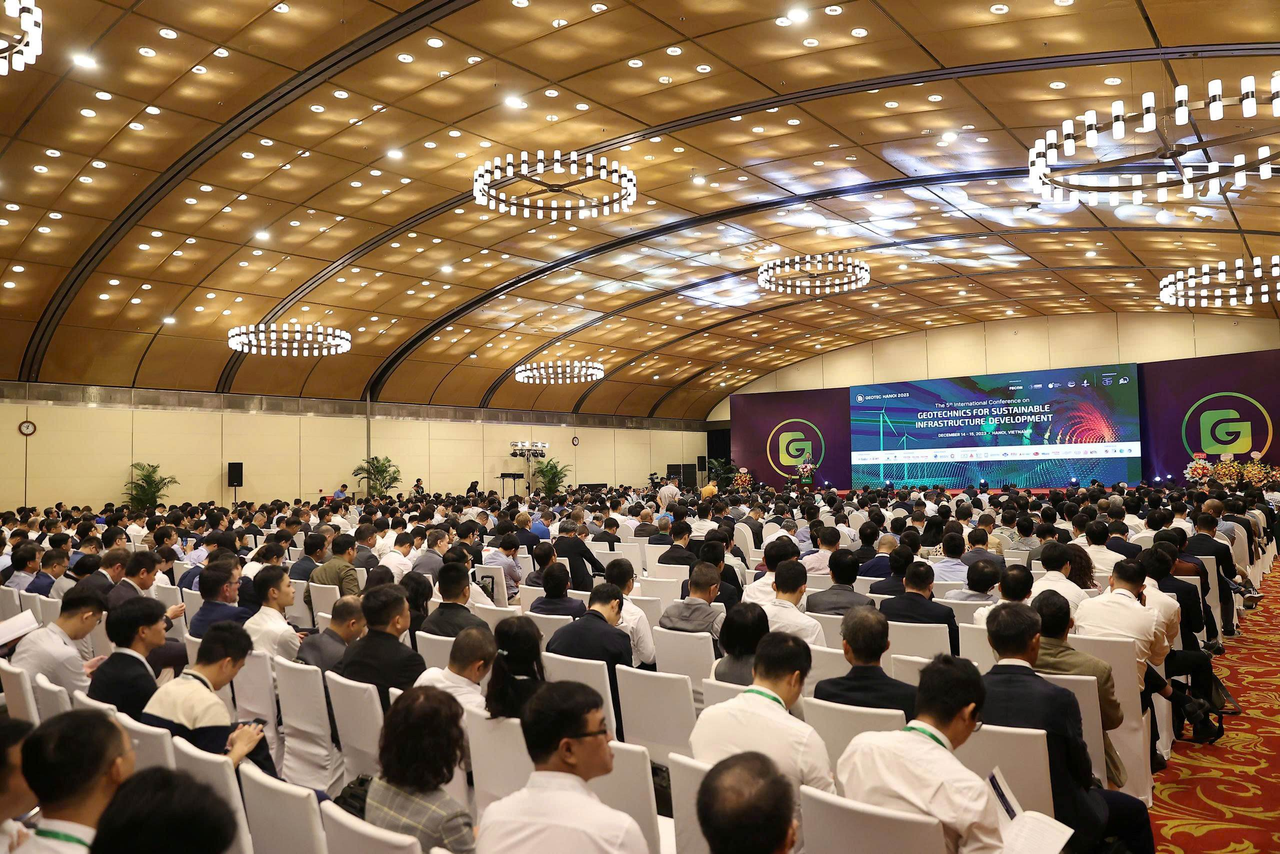
When FECON Corporation initiated the International Conference on Geotechnics (GEOTEC HANOI) in 2011, the private construction enterprise was still quite young. At the time, Vietnam lacked specialized forums capable of regularly connecting domestic researchers with the world’s leading geotechnical experts. Yet, that first event attracted 450 delegates from 24 countries, featured 110 scientific papers, and welcomed major figures in the international geotechnical community.
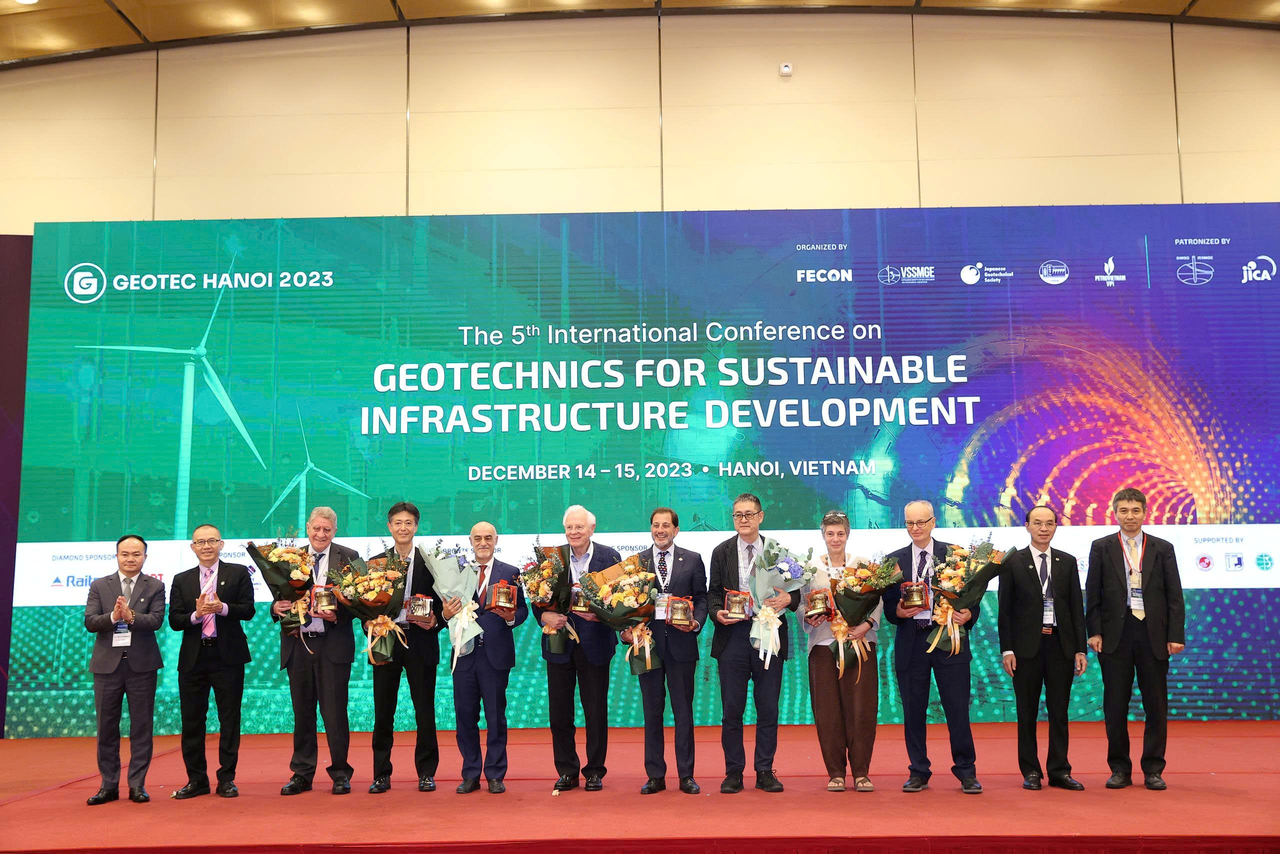
Through subsequent conferences in 2013, 2016, 2019, and 2023, GEOTEC HANOI gradually formed a formidable network connecting businesses, universities, research institutes, professional associations, and experts—both domestic and international. This network facilitates the continuous exchange of the world’s most advanced technological knowledge.
Throughout this process, the Vietnamese Society for Soil Mechanics and Geotechnical Engineering (VSSMGE) has played a crucial role in academic connection and professional oversight, merging corporate organizational resources with the scientific foundation of a professional association.
By 2019, the third conference attracted over 800 delegates from 37 countries across five continents. In 2023, attendance for the fourth conference surpassed 1,200 participants from roughly 40 countries, with over 280 abstracts submitted by about 800 authors. For many years, the conference has been sponsored by the Japan International Cooperation Agency (JICA), and since 2019, it has received official sponsorship from the International Society for Soil Mechanics and Geotechnical Engineering (ISSMGE).
“Foundational Knowledge” Goes Beyond Scientific Papers
The concept of “foundational knowledge” might sound abstract, but in geotechnics, it is built upon very concrete values.
First is the ability to accumulate and inherit knowledge. Across multiple GEOTEC HANOI conferences, hundreds of research projects have been selected, peer-reviewed, presented, and published internationally. Each study adds another layer of data, methodology, or experience so that subsequent generations can continue to build rather than starting from scratch.
Second is the network of experts. In highly specialized technical fields, technology transfer is not just about buying machinery or software; it travels through people. It comes from academic exchanges, joint research, and international experts discussing on-site issues. Most importantly, this knowledge is fully realized in design projects and construction sites—from the simple to the complex—under diverse geological conditions.
For an industry so closely tied to regional geological characteristics, this connection is vital. Not every internationally successful technology can be applied exactly as-is in Vietnam. Global knowledge must be verified, adapted, and gradually transformed into the native capabilities of the domestic workforce.
When AI Enters Geotechnics
The need for deep knowledge becomes even more urgent as the construction industry enters the era of big data and AI.
Modern projects generate massive volumes of data, from initial surveys to structural monitoring. AI opens up possibilities for processing this data, identifying trends, forecasting, and assisting engineers in analyzing complex geotechnical systems. However, AI only delivers true value when paired with high-quality data and guided by highly specialized engineers who know how to ask the right questions.
Therefore, AI does not diminish the role of foundational knowledge; on the contrary, it makes this foundation even more critical. GEOTEC HANOI 2026 will, for the first time, feature the application of AI in geotechnics as a key topic, introducing a highly modern and technically advanced session.
Alongside AI, “Geotechnics for High-Speed Railways” is another new theme this year. These additions mark a clear shift in the field of geotechnics: moving from solving traditional foundation issues to managing increasingly large, deep, complex, and data-rich infrastructure systems.
An Ongoing Journey
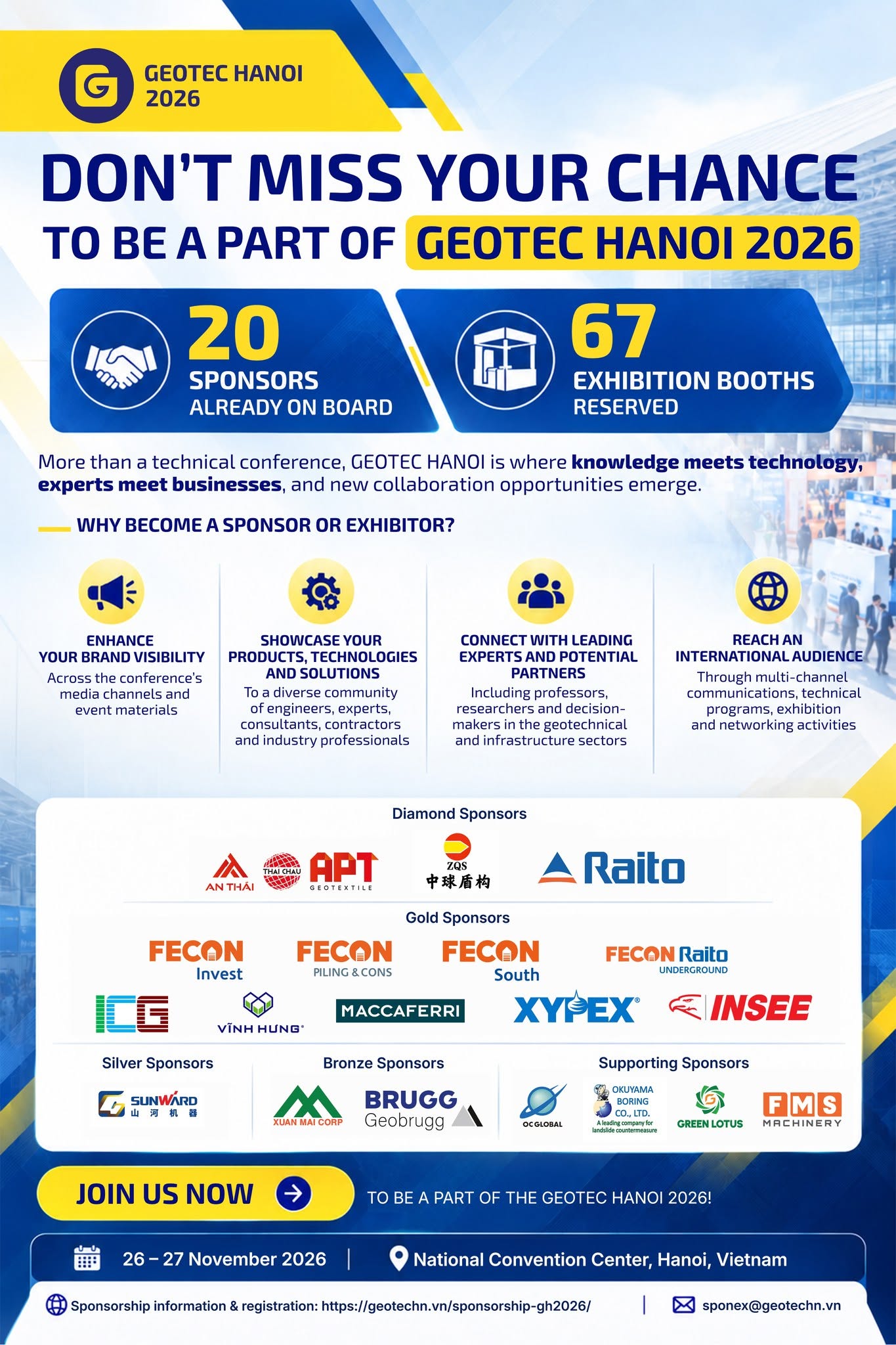
The 6th GEOTEC HANOI takes place just as Vietnam enters a new cycle of infrastructure investment—exploding in both the scale and difficulty of its megaprojects. The conference will return to the National Convention Center in Hanoi on November 26–27, 2026. This year, joining FECON and VSSMGE as a co-organizer is the Chinese Institution of Soil Mechanics and Geotechnical Engineering (CISMGE).
Notably, the themes addressed at GEOTEC HANOI 2026 are increasingly evident in Vietnam’s real-world infrastructure development. Hanoi and Ho Chi Minh City are aggressively expanding their urban rail networks; the North-South high-speed railway project poses massive demands on the technology, standards, and execution capacity of local teams. This is alongside the development of underground works, nuclear power, offshore wind, and other massive infrastructure projects with ever-rising technical standards.
Behind these megaprojects lie highly specific challenges: geological surveying, ground treatment, settlement and deformation control, tunnel excavation, structural monitoring, and the use of data and AI to ensure design, construction, and operational safety. This conference provides a valuable opportunity to apply research achievements to solve real-world problems in major infrastructure projects.
Looking back on a 15-year journey with six events, the true significance of this international scientific conference is not simply that attendance has grown from 450 to over 1,200, or that participating countries have expanded from 24 to 40. More importantly, the conference creates a space connecting science, technology, design firms, and construction contractors—bridging scientists with the engineers doing the daily work. It is a place where international knowledge is received, verified, and continuously integrated into the expanding capabilities of Vietnamese engineers.
In an era where Vietnam must execute increasingly large and complex projects, the ability to master technology cannot be measured solely by the machinery purchased or the number of projects launched. It relies heavily on the ability to understand, receive, verify, improve, and create proprietary knowledge to confidently conquer the most difficult challenges in the modern construction industry.