

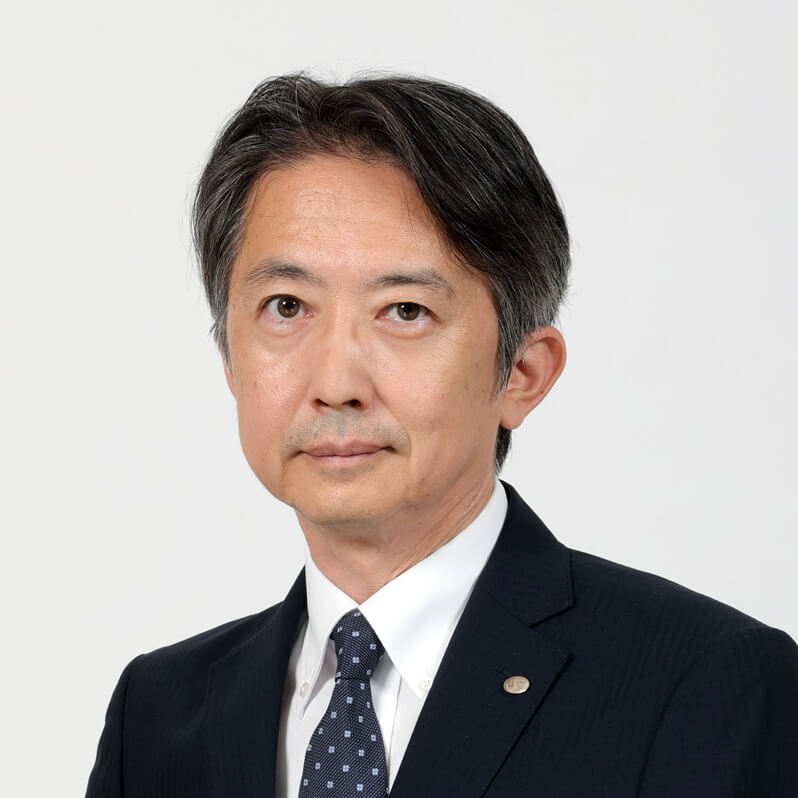
Dr. Susumu Nakajima
Tokyo, Japan
Biography
Susumu Nakajima, Ph.D. is Head of the Geotechnical Engineering Laboratory at the Railway Technical Research Institute (RTRI), Japan, and Visiting Professor at Tokyo University of Science. He received his B.Sc. from Tokyo University of Agriculture and Technology and his M.Eng. and Ph.D. in Civil Engineering from the University of Tokyo. His professional career spans both industry and research, including experience in major civil engineering construction projects and more than 15 years of research on railway geotechnical engineering.
His research focuses on the design, construction, maintenance, and disaster resilience of railway earth structures, including reinforced soil structures, retaining walls, embankments, slopes, and foundations. He has led the development of innovative technologies for high-speed and conventional railways, such as geosynthetic-reinforced soil (GRS) structures, seismic retrofitting methods for existing earth-retaining structures, performance-based design approaches, and rapid restoration techniques for disaster-damaged embankments. His recent work also addresses climate resilience, flood resistance, sustainability, and the utilization of recycled and excavated materials in railway construction.
Dr. Nakajima has authored or co-authored more than 250 technical publications, including papers in leading international journals such as Soils and Foundations, Soil Dynamics and Earthquake Engineering, Landslides, and Geosynthetics International. He has also contributed to numerous technical standards, design guidelines, and international railway projects, and holds multiple patents related to geotechnical structures and railway infrastructure technologies.
He has served on numerous national and international committees of the Japanese Geotechnical Society, Japan Road Association, Japan International Cooperation Agency (JICA), and other professional organizations. He has been actively involved in technical support for high-speed railway projects in Asia, including India, and has delivered keynote and invited lectures on railway geotechnics and reinforced soil technologies worldwide.
His contributions have been recognized through numerous prestigious awards, including the Science and Technology Award from the Ministry of Education, Culture, Sports, Science and Technology (MEXT), Japan (2025) and the MEXT Young Scientists’ Award (2013), as well as multiple JSCE Paper Awards, Japanese Geotechnical Society Paper Awards, and several international best paper and presentation awards.
His research on disaster-resilient railway earth structures has significantly influenced both engineering practice and design standards in Japan and abroad.
Design of ballasted tracks, slab tracks, roadbed and subgrade for high-speed railways
Japanese high-speed railway network, the Shinkansen, has been developed under challenging natural conditions characterized by mountainous terrain, frequent earthquakes, heavy rainfall, and complex geological environments. These conditions have significantly influenced the design and construction of railway earth structures. This presentation first introduces the natural environment of Japan and the structural composition of the Shinkansen system, highlighting the important role of earth structures in railway structures. It then reviews key lessons learned from the construction of the first-generation Shinkansen, which provided the foundation for subsequent technological developments.
Particular emphasis is placed on the evolution of reinforced soil technologies, including geosynthetic-reinforced soil (GRS) structures, and their application to embankments, retaining walls, and bridge abutments. The presentation also discusses major geotechnical challenges encountered in recent Shinkansen projects, such as seismic resilience, construction on difficult ground conditions, environmental constraints, and sustainability requirements.
Finally, recent research and development activities are introduced, together with examples of their implementation in actual railway projects. Through these case studies, the presentation demonstrates how innovative geotechnical technologies contribute to the safety, resilience, constructability, and long-term performance of Japan’s high-speed railway infrastructure. This overview provides lessons and practical insights that may be applicable to high-speed railway development in other countries.

Corporation (CARS), Beijing, China
Tokyo, Japan