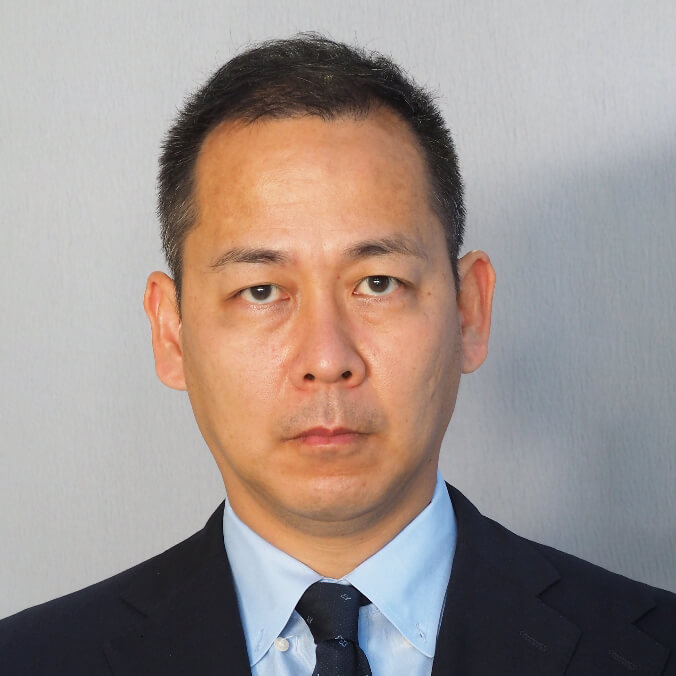
Dr. Yoshitsugu Momoya
Tokyo, Japan
Biography
Dr. Yoshitsugu Momoya is Director of the Track Structure Division at the Railway Technical Research Institute (RTRI), Japan. He received his bachelor’s degree in 1996 and his master’s degree in 1998 from the University of Tokyo. He joined RTRI in 1998 and subsequently earned his doctoral degree from the University of Tokyo in 2004. From 2009 to 2011, he served as a railway accident investigator at the Japan Transport Safety Board (JTSB). In 2014, he was appointed Head of the Track Structure and Geotechnology Laboratory. Since 2022, he has been Director of the Track Structure Division. Dr. Momoya has more than 28 years of professional experience in railway track engineering.
His primary research interests are railway track engineering, including ballasted tracks, slab tracks, roadbeds, and subgrades. His doctoral research investigated the effect of principal stress axis rotation on the deformation characteristics of railway subgrades subjected to moving wheel loads. The outcomes of this work led to the development of a design method for asphalt roadbeds in newly constructed ballasted tracks, which was later adopted in the Japanese design standards for earth structures. Following this work, he concentrated on the deformation mechanisms of ballasted tracks in transition zones. He also carried out performance assessments of integrated reinforced concrete roadbeds supporting slab tracks on soft clay subgrades in newly constructed Shinkansen lines.
Following his two-year appointment at the Japan Transport Safety Board (JTSB), and later as Head of the Track Structure and Geotechnology Laboratory, he led a wide range of research and development projects. These included the seismic stability of ballasted tracks, roadbed improvement techniques for ballasted tracks on soft subgrades, development of the Railway Falling Weight Deflectometer (RFWD) for track stiffness evaluation, rehabilitation of deteriorated ballast materials, and maintenance technologies for aging slab tracks. He also led the development of the S-type solid-bed track, a novel track system designed to mitigate structure-borne noise. The system is now widely used in urban elevated railway construction projects throughout Japan. As Director of the Track Structure Division, he oversees and leads research and development programs covering track structures and components, track geometry management and maintenance, as well as rail maintenance and welding technologies.
He was one of the original members of ISSMGE Technical Committee 3 (Geotechnics of Pavements) and subsequently served on Technical Committee 202 (Transportation Geotechnics). He has made significant contributions to the field of transportation geotechnics for more than 20 years
Design of ballasted tracks, slab tracks, roadbed and subgrade for high-speed railways
The Tokaido Shinkansen, Japan’s first high-speed railway line, commenced operation in the 1960s with ballast track on embankments as its fundamental track structure. However, the performance of the roadbed and subgrade was insufficient, resulting in considerable maintenance challenges. Based on these experiences, design standards for earth structures were established in the 1970s.
In addition, asphalt roadbeds were adopted for ballast-track sections on newly constructed lines, significantly improving the performance of the roadbed and subgrade and thereby reducing maintenance requirements. At the same time, slab track was developed with the objective of achieving a virtually maintenance-free track system. It was first installed in tunnel and viaduct sections of the Sanyo Shinkansen, which opened in the 1970s. Subsequently, extensive studies were conducted on the application of slab track to earth structures, and the findings were incorporated into the design standards, making it possible to install slab track on high-quality earthworks.
Further research was also carried out on the use of slab track over soft ground conditions, leading to its adoption on the Tohoku Shinkansen. This presentation introduces the design concepts and specifications of ballast track, slab track, and the roadbed and subgrade systems used in Japan’s Shinkansen network.

Corporation (CARS), Beijing, China